Friday, August 24, 2012

Guilty Pleasures: A Blog Series

"Confound it all I love it though--Jack Skellington

Guilty pleasures: we all have them, and however much they may come down to class issues and the environment we grew up in, a lot of people still want to hide them because they want to establish a reputation with others. No one has impeccable taste, but most people want to create a good self-image, so we hide our little "lapses".

It's hard to define what makes a "guilty pleasure", and it's different for everyone. In my case there are two main kinds of guilty pleasures. One: a work you enjoy has a certain amount of content that you disagree with morally, or is of a certain low level of quality, so that you become uncomfortable about admitting you like it. The exact ratio is hard to define. There are some things I like that could be guilty pleasures, but I find enough in them to counterbalance the feelings of disagreement and/or bad quality.

The second, rarer kind is when you take only a mild or completely justifiable pleasure in something, but you let yourself be shamed into staying silent because you see so many people you respect criticizing it and you don't have a very strong defence in place.

Considering how much vapid children's entertainment I also take in, this blogging series should be a lot longer than it is, but there is room to add more as needed. Some of these things I've admitted to before, others less often, or are entirely new. This is also an arbitrary list, with order being meaningless.

Tuesday, August 21, 2012

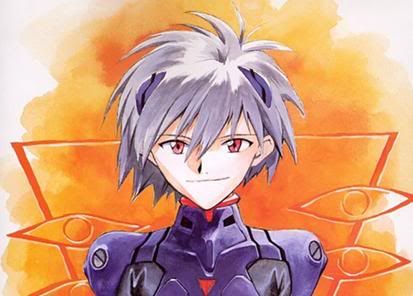
Who is Kaworu Nagisa?


I decided to rewatch Neon Genesis Evangelion for the first time in two years. I enjoyed it as much as I ever did, and it gives me an excuse to talk about something important to my experience with the series: the reason I don't ship Kaworu x Shinji.

It might be a tough thing to justify, when it seems like everything should be in place for me to ship it. I like both characters, find their rapport convincing, and I'm not homophobic (though this might make me look like I am). But I believe Kaworu plays a symbolic, ironic role that makes shipping him with Shinji a contradiction of what the series is trying to convey. That, and I don't ship anyone in Evangelion because all relationships in the series are dysfunctional, so I don't see the appeal of exploring the couples.

Anyway, Kaworu is a character that "needs" to die because he represents an unreal idealism that contradicts the rest of the series and the lessons Shinji must learn. Shinji must reject Kaworu in order to accept the real world in all its flaws, rather than retreat into the company of an idealized companion. It parallels Shinji's ultimate fate in both the television series' final episodes, and the film End of Evangelion.

In both versions of the ending, which may or may not be concurrent, Shinji Ikari rejects the comfort of a closed-in world for the experience of real humanity, however the narrative defines it. In the TV version he is moving from a closed-in world that is part of his wishes, to...something. Perhaps it is acceptance of the world of Instrumentality, the merging of all souls into one being, perhaps not.

In End of Evangelion, it is slightly more clear-cut. The remnants of Rei Ayanami give Shinji Ikari the ability to determine the direction of Instrumentality. At first he wishes that everyone would simply die, because the hates the world after what's happened to him. In response to his wish, the fused Rei/Kaworu/Lilith/Adam being initiates Instrumentality.

Even though Instrumentality is designed to eliminate the fundamental loneliness of humanity, and Shinji might've been happy inside it, he eventually overcomes his hatred of humanity to declare that he wants to be in the real world, even though it can be painful to exist there. Thus, he breaks Instrumentality, the fused being falls apart, and he returns to earth, with everyone having the potential to also return.

Even though Shinji isn't conventionally rewarded for his conviction, ending up currently alone on a strange, red Earth and strangling the first person to appear beside him, the choice he made is still meant to be the moral one, since it was exactly what the story was building up towards. Choosing Kaworu would be the opposite of what the story was building towards.

Just like Instrumentality could represent a cocoon preferable to real existence, Kaworu also represents a love preferable to the real existence, both potentially free of fear and uncertainty. Asking if Shinji and/or Kaworu are "gay" isn't the important question. The relationship between Kaworu and Shinji is deliberately unnatural in its speed and depth, so it can't be considered part of the characters' "ordinary" sexuality.

Instead, the relationship is beyond ordinary, beyond the "norm" of Shinji's existence. And Shinji does not fall in love with Kaworu as a person, but as an ideal. Shinji is not capable of a healthy, ordinary relationship, accepting another being with all their faults and flaws. Instead, he is unsure of what he wants, but so trapped in his own mind that he can't open up to a real person. It is a prefect situation for an unreal person to appear, and make the outcome more effective.

When Kaworu appears, Shinji has lost everything, or it has been corrupted. His overtures to his father were crushed with Toji's entry plug. His school friends all have to go because his city has been destroyed, including the injured Toji. Asuka, whom he masochistically looked up to, has had a complete breakdown, no longer being the "hero" he thought she was. Rei and Misato are both distant, Rei being a new clone has lost the tentative bond between them. And both of them now represent a disturbing mix of maternity and sexuality, Rei because she is his mother's clone, Misato because she was Shinji's mother figure, but reached for him on that bed.

Under these conditions, Kaworu appears even more like a dream than he otherwise would. He asks for nothing and gives everything, compliments Shinji in ways that would seem absurd to all the jaded folks watching ("I think I may have been born to meet you, Shinji Ikari"), and is immediately interested in Shinji as a person, and always maintains a calm, stable air, asking for nothing. His gender might also serve to further distance Shinji from his real world of corrupted potential love interests.

To further emphasize that Kaworu is not meant to be taken at face value, he makes cryptic pronouncements about the nature of man, and Misato and Hyuga race to figure out just what Kaworu is. The audience knows something is up, as they are being primed to accept this swift attachment between the two characters as building to something greater and darker than just Shinji getting his wish.

The bonding between Kaworu and Shinji is, in short, aware of its unreality and works with it. Kaworu is not realistic. Kaworu is not human. He doesn't fit with the world of Evangelion, and not just because he is an Angel. In this series, a perfect companion, who asks nothing but your happiness, will not simply appear and solve everyone's problems.  He does not fit with what we know of humanity, both the real version and all the flawed example seen in Evangelion. And, so he must be killed. It's not about Kaworu being "too good" for that world, in the sense that we are all supposed to mourn for the death of an "angelic" innocent, but that he just doesn't fit in.

Kaworu's abrupt entrance and exit further underlie the way he cannot "exist" according to the rules of the story. If Kaworu were around for longer, perhaps the narrative would need to define him as an individual character, fleshing him out beyond his symbolic role. But as he exists in episode 24, Kaworu's small existence lets him be just a symbol, and it fits him because of the role he plays.

Kaworu's betrayal also doesn't mean he is not an idealized character. Even though Shinji is angry with him, the scene ends with Kaworu still being a kindly figure. He tells Shinji that he is the one who deserves to live, and sacrifices himself to save Shinji and, by implication, humanity. Shinji is in turn destroyed emotionally by having to kill Kaworu, proving that the bond between himself and Kaworu did not disappear. He still views Kaworu as an idealized figure, and one worthy of existence.

The moment of betrayal, however, raises a question: was Kaworu lying all along, and does it affect the interpretation of Kaworu as a symbol? SEELE apparently sent Kaworu to NERV to initiate Third Impact in the guise of a replacement EVA pilot. Some fans have inferred that Kaworu's overtures to Shinji were part of the infiltration. 

Yet since Kaworu can just use his powers to manipulate EVA-02 and open Terminal Dogma, a close relationship with Shinji is not required for infiltration.  And if Kaworu were lying, he would not have left his mission incomplete and declared he was giving his life up for Shinji. It's still possible for Kaworu to be a liar if one assumes Kaworu was part of a design to break Shinji's mind, but as with much of Evangelion, the exact details are open to interpretation.

In End of Evangelion, SEELE wishes to break Shinji's mind as part of the process of Instrumentality, but it is not clear if Kaworu's appearance and death was designed to further that breakage. It might be possible.

However, the interplay between Kaworu and Shinji, while not destroyed if Kaworu had ulterior motives, is the most effective if a viewer assumes Kaworu was being earnest. The reason why he would bother with Shinji would remain unexplained, but they aren't that important. What is important is what Kaworu represents, as outlined above.

There are other versions of Kaworu, namely the ones in Yoshiyuki Sadamoto's manga adaptation, and in the Rebuild movies. Rebuild Kaworu hasn't done much yet, and it is possible he may play a completely different role. He has once said he would like to make Shinji happy, but if that will lead to something similar to his television role is unknown.

Characters aren't obligated to be the same throughout each iteration, but no other version of Kaworu has been as effective and affecting, and it's no surprise the original Kaworu would be hard to follow up on. Personally, I'd like to see if a work could alter Kaworu's television role without removing what made it interesting, perhaps giving him more depth of character but still managing to be inhumanly idealized. But that, however, is coming from a viewpoint of someone who already considered TV Kaworu to be the ideal.

Sadamoto's version of Kaworu has been nicknamed "Evil Manga Kaworu" because he once snapped a stray kitten's neck out of ruthless pragmatism. But when he becomes part of the main cast, this time earlier than before, he's more obnoxious than sinister. He lacks a sense of appropriate social boundaries and is questioning of human emotions, but in a way that makes him seem like a run-of-the-mill creep or a sullen brat rather than a thoughtful "alien". Shinji is also actively hostile towards him, and a kissing scene is played for his disgust rather than confused titillation.

I can imagine someone cheering Sadamoto for removing the taint of romanticism and idealism and a "shallow" character from the storyline. However, like I said, the original Kaworu was not meant to be taken completely at face value; his alien nature and brief betrayal show that Evangelion did not suddenly lose its teeth when Kaworu appeared. We all know Gainax wouldn't be above creating a character to draw in fangirls/yaoi fangirls, and it'd be unsurprising if that was another purpose beyond Kaworu, but that doesn't make him this ill-fitting example of sugary romanticism, especially in light of the relentless marketing of the female cast. Kaworu was never a misstep into fantasy land, but a justifiable part of the series narrative.

Therefore, to be annoyed with "Evil Manga Kaworu" is not about pearl-clutching that such a "sweet" character became so nasty, but being annoyed at the simple act of change, and that what in its place is just plain boring.

Going back to the original Kaworu, he's a good example of a character that doesn't seem to fit with his environs, before you realize how well he actually does. Some of what Kaworu ended up representing could be accidental, but it's effective nonetheless. It questions the notion of the idealized companion without beating viewers over the head with it, and manages to justify a character that could be perceived as shallow. In the process, though, it also enforces the strict pragmatism at the end of Evangelion, and ensures that the idea of a romantic relationship between Kaworu and Shinji would be greatly missing the point. Sometimes "the point" isn't what shipping is really about, but it still makes me want to avoid supporting the pairing.

Saturday, August 18, 2012

What is a Pterobat?

What is a Pterobat?


So, my blog name. It's the result of trying to change my Internet Name after over a decade of using it. It finally occurred to me that "Incisivis" wasn't the easiest thing to spell, pronounce, or remember, just as it eventually occurred to me that "Dragonclaw", my previous one, was uncreative and probably made me sound like a dopey furry. Being that way, I eventually settled on "Pterobat".

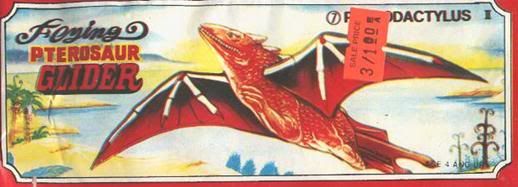
"Pterobat" is obviously a combination of the words "pterosaur" and "bat", two of my favourite things, and it has a certain ring to it. I started using it to refer to a certain style of wing found on the characters of Disney's Gargoyles series: characters who had tiny hands on their wings and a single supporting rib, but with the wing's edge being notched to suggest there was further, "invisible" ribbing. I never used it this very much this way, and so repurposing it was easy.

Today, I think of "pterobat" as referring to that certain kind of biologically inaccurate pterosaur which has batlike wings (hands included or not), usually also mixing features from different species. I also kept thinking of alien animals from the Transformers cartoon that might be called pterobat-like.  Shrikebats, first mentioned in the movie, and depicted in the episode "Chaos" of the original TV series, and a similar, smaller creature called Groyle is also seen in the episode "Madmans Paradise".

Picking the name rises from my pterosaur obsession, which I've had since childhood. I collect pterosaur junk and know a few things about things, and also wait for the day when a pterosaur-based fictional character doesn't suck. I don't know why I like pterosaurs like I do, but I don't mind pterobats at all.

The current blog header is derived from a piece of art by Edward Newman, and it actually is an early attempt at depicting a pterosaur. According to his Wikipedia entry (*sigh*) this was Newman interpreting a pterosaur as a mammalian creature, a "marsupial bat", and he published this in an 1843 edition of The Zoologist. Interesting if true, since it makes my header selection pretty on-the-nose, when I didn't know the origin of the art at first.

Monday, July 23, 2012

Pixar's "Brave": Questioning the Rebellious Princess


Brave is not about a Rebellious Princess who undergoes an awakening into heroism. Instead, it's about a Rebellious Princess who puts a spell on her mother in order to break out of the role, and must right her wrong. There's also a lot of comic relief, an impending clan war, and an evil monster bear.

There were some good parts to this movie, some parts that didn't work, and an it overally defines the term "mixed bag", and thus leaves a viewer wanting a little bit more, for it to stick to what it established.

Because Merida ends up turning her mother into a bear as a result of the usual "spirit not letter" wish, and then refuses to admit it is her fault, the movie places Merida's mother, Queen Elinor, on the moral high ground. True, Merida and her mother both must reconcile their dislike of each other in order to break the spell before it becomes permanent, but Merida is further in the wrong right from the start.

Merida's objections to stifling protocol and an arranged marriage are played like the carping of a spoiled brat, and her objections never feel as though the narrative takes them seriously. She is also the one who cast that damaging wish, and clan war starts brewing over her defiance of that arranged marriage. When Merida must finally fight a monster, all her crack shooting with arrows becomes completely ineffective. This all makes it clear that Brave wishes to tell a story that questions the value of the cherished fantasy archetype.

In the end, however, Brave becomes hesitant about any of these things. Despite all the dumping on Merdia, the narrative still decides to stick with modern values. Merida declares that people can choose who they love instead of engaging in contests for her. It feels like lip service, since the implication is that the three clan princes are still all she can choose from, and of course because Brave was, up till that point, not celebrating female rebellion.

The best thing to come out of the film is the relationship between Merida and her mother, Elinor. It's rare that a mother/daughter relationship is at the centre of an animated fantasy film, and the reconciliation between the two is honest and heartfelt, but it only begins when Merida tries to make good on her mistake.

 Elinor is also not a strawman, since her desires are instead connected to current practical need as stemming from tradition. However, developed characters does not mean a movie is neutral, and it is exactly because Elinor's concerns are justified that Brave appears to challenge the Rebellious Princess myth.

Another false impression that Brave gives from the trailers was that it would be a more dramatic and earnest film than it was. As it happens, there is a lot of comic relief, which isn't grating if a viewer expected it, but it's disappointing when it seemed Brave was to be going in a more straightforward direction.

Most of this comic relief comes from the entire male cast. Merida's father King Fergus is a ferocious warrior and loving father, but he's also there to be "the fun parent" and "the goofy dad". Queen Elinor is clearly the one who wears the "pants" in the castle and the only one concerned with making sure it's running smoothly. As a result, Fergus is just comic relief, and stacked up against his wife's emotional growth, is a weak character. When Pixar movies are usually so good, to see such a lazy dynamic between the parents is disappointing.

The other clan heads and their sons are even sillier, which makes the threat of impending war harder to take seriously. Because they are such silly characters, one could think that this is a concession to the championing of western values, a knock on arranged marriage, but it's difficult to shake the impression given by the main storyline. There is still potential war going on, however comical it looks.

Add to this Merida's little brothers, who are only named once and no lines at all, it seems like the movie built up its central female dynamic and just decided to call it a day, instead of creating a fully fleshed-out cast of both genders.

However, there's also a lot of slapstick coming from the female characters. The transformed Elinor refuses to get rid of her crown or dainty behaviour, and communicates through pantomime and anthropomorphic expressions. The forest witch also sells bear carvings, with an entire hut full of quirky wooden automatons, and also puts on a welding mask to use her cauldron, which also functions as a voicemail. There's a maid who always screams and is tormented by the princes. It's all just a little too goofy.

Another problem is the antagonist Mor'du, the monstrous bear of legend. Mor'du was once a man, fighting his brothers for control of a kingdom. He wished "for the strength of ten men" and became a giant bear instead. There are reasons for him to be in the film: he appears in the cold open and took Fergus's leg, his legend is what Elinor uses to try to teach Merida a lesson, and the forest witch implies she was responsible for him, too. His fate reinforces the notion that you must Be Careful What You Wish For, and reminds viewers that Elinor's transformation could become permanent. However, Mor'du only appears at the beginning and the middle of the film.  He is connected to the story, but it's a weak link, because when Mor'du is not there, his presence is not missed.

In fact, because the film already has the mother/daughter conflict, the need to break the spell, and the need to reconcile the hostile clans, Mor'du feels like a fifth wheel, maybe added only because of the false expectation an animated family film must have a villain.

In the middle of this muddle, viewers might ask why the film is called Brave when it's not about a heroic rite of passage. The most likely explanation is Merida is "Brave" for admitting her mother could be right, and that the spell was her fault and not the witch's. In addition, Elinor and Merida are both "brave" for reconciling themselves to each other's worldview. If this was the intention, however, the theme does not hang strongly enough. As mentioned above, it obvious that Merida needs to change far more than Elinor does, and the film still waffles, unable to commit to the criticisms it makes.

Many have compared the film to How to Train Your Dragon, but the similarities are only surface, coming from their visual motifs. There is a fundamental difference between the two movies, which is that Hiccup learns he can be himself instead of being the Viking boy his father wants him to be, while Merida learns that being the princess girl her mother wants her to be isn't that bad. How to Train Your Dragon also sticks absolutely to its theme and makes it clear, while Brave backs off.

The overlaid comic relief, the fifth-wheel antagonist, are also problems. As a final cap, the movie also feels derivative and predictable. Much of Merida and Elinor's arguments have a familiar ring, as does the fact of wishes that backfire, and the sitcom dynamic between husband and wife. Many events are easy to call before they happen.

These facts are as disappointing as they are aggravating. Brave represented a change for Pixar, its first attempt at heroic fantasy and its first film with a female protagonist, and it could have been much better than it was. This doesn't represent a permanent step down for Pixar, but it is a sad thing.

Wednesday, July 11, 2012

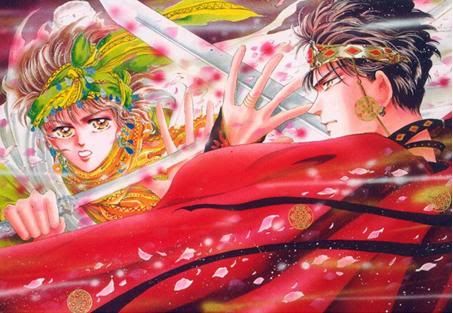
Yumi Tamura's Basara


If this manga could be described in one sentence, it would be "heroic fantasy as seen through a feminine lens". The structure of Basara is a familiar one: a hero rises from humble circumstances to change a world that is under the thrall of an evil king. Yet this version is also heavily inundated with romance (by both the classical and modern definition) and melodrama. Many tears are shed on all sides and by both genders, and the central conceit is that the heroine and hero are actually on opposite sides of a war…but they don't realize it when they fall in love.

Technically Basara is science fiction, as it takes place in a post-apocalyptic Japan that has become in large part a desert. But to the initial eye, these characters seem to come from the distant past, with robes and swords and ancient-looking villages. The exact nature of the disaster is never explained, with the present-day story being far more important.

Japan is under the rule of King Ukon, who has divided his territory among his chidren: the Black, White, Red, and Blue Kings. In a small desert village, a pair of boy and girl twins have been born, and one is prophesied to be the "child of destiny" that will save Japan. Everyone assumes it is the boy, Tatara, and he is celebrated while his sister Sarasa grows up in his shadow.

However, when a raid by the Red King's army leads to Tatara's death, Sarasa disguises herself as her brother, and sets out to gather allies, overthrow the dynasty, and bring peace to Japan. Sometimes she  goes to bathe undisguised at the nearest hot spring, and there she meets a handsome boy named Shuri. They fall in love, meeting at hotsprings and communicating long distance. However, neither realizes they are Tatara and the Red King, sworn enemies.

Basara  is an epic in the truest sense. Unlike some other long manga series, each volume, except for the last two, feels like a single novel split into multiple parts, with the story gathering momentum through each book, and the scope of the world gradually revealed. No space feels wasted, and more importantly, though it is wide in scope with a large cast, Basara remains focused on the emotion and characterization, which makes the larger plot compelling.

Also like most good stories, Basara does not proceed in a straight line to the ending its characters anticipate. Shuri and Sarasa discover the truth in the middle of the story, and King Ukon is not what they would expect when the audience finally meets him.

The girl-disguised-as-a-boy is a classic trope, and thankfully Basara doesn't keep it a secret from her allies until the very end. Sarasa is a compelling heroine, one of those who is obviously destined to win, but shows enough weakness and indecision that they are "human" while still obviously a hero. Sometimes the emotions involved may seem a bit over the top, but that is the nature of this genre of manga. Shuri is also a worthy match, fierce in battle but easygoing out of it, and able to question himself and his role. Both of their characters change and develop over time, and other cast members also change.

And, if you're searching for progressive ideals in fiction, one could do much worse than Basara. It's the sort of story where some concession is made towards a realistic depiction of the status of women in a "medieval" country, but female characters are given plenty of opportunities to shine in both feminine and masculine roles. The story also doesn't suggest that Sarasa secretly pines to return to her "proper" role as a girl. Any moments where she wishes to "just be a girl" are attributed to normal stress, and are about her young age more than her gender.

The art is shojo art, consistent with its manga genre. The young adult characters are often lean and androgynous, with similar bodies once the hair, skin tone, and clothing are taken out of account. However, Tamura can also draw characters of other body types and ages. "Cute" characters such as babies and Sarasa's pet owlet Shinbashi are drawn in a cartoony, scribbled style, which creates an inconsistency. Backgrounds are often amorphous and can make it difficult to see what is going on in the worst cases. However, the costume designs are great, and the art isn't actually bad, it's just a style that may be difficult to get used to, since by 2012, it might be considered "old-school".

The actual story ends at volume 25, while the material continues to volume 27. These last two volumes are a disappointment: Tamura's short comic strips about her characters are fun, but the rest of it, the series of short stories, add things we don't need to see or don't want to see. There are revelations and sequel content that are too cheesy, or too unnecessarily bleak. They can't bring down the rest of the series, but they are disappointing volumes.

Basara is neither a story about the large conflict or the small conflict. Both blend together, both are important, and this gives the series a richer feel than it otherwise would have. It is a crying shame that this series is currently out of print, with volumes 18-20 suffering from enormous price inflations on the secondary market.

Thursday, July 5, 2012

Diagnosing Loki Fangirls

Well, I've been away from blogging for a while, and there's no excuse but that I somehow lost the mojo, which is easy to do since this is a hobby and not the job I intend to have. It's why I can be so lazy to begin with. So, let's get to it.

I saw Thor a while ago, and it was a fun movie--to me, it read like a better version of The Lion King, with a more compelling arc for the lead, a consistently threatening villain, and a more palatable take on all that fantasy racism. I also saw The Avengers before that, feeling I knew enough of the continuity to get by, and I was right. Both films have the kind of spirit I hope my work to have someday: ultimately gimmicky fun, yet also capable of some heartfelt emotion and never losing a sense of humour.

Something I want to talk about, though, is how many fangirls Loki has, and the fan boy "theorizing" as to why it happened.

I want, and try, to make room in my worldview for multiple interpretations of fictional characters, but at a certain point the notion that a character who commits evil deeds isn't a villain becomes something I can't get on board with. Regardless of the reasons these characters have for turning to evil, no amount of sympathetic backstory or understandable motivation can wipe their records clean. Writers should still try to give their villains these two things in order to create a richer world, but usually the roles of hero and villain are usually still clear enough.

The weird thing is not that female viewers have a crush on Loki, but that some of them insist he's not a villain. All of this has been attributed to some kind of hardwired female masochism. Women are inclined to throw themselves at dangerous guys in reality or fiction, trying to change them, trying to interpret them as Not Such a Bad Guy. This is the nasty gender stereotype explanation most often floated for villain fangirls, and it's not supposed to end with fiction.

It suggests women suffer from a fundamental lack of perception as to what a character is "really" like, i.e. a bad person, and that they always desire to "change" a man, an enterprise that would be useless and ultimately hurtful were the character real, but dammit, those silly little women would just keep trying. It's all implied to mirror a drama carried out in real life, a dramatic role that has nothing to do with societal expectations of women, but just the way women are. Women like to hurt themselves by being attached to assholes, whether in reality and fiction.

It's pretty disgusting to see over and over again, and because of this it's tempting to view the stereotypical "villain fangirl" as a straw(wo)man, designed to prop up these myths of female masochism. Yet evidence for this type of nerd exists all around us, so to a point it's real, but the explanations may not be.

Thursday, June 7, 2012

Goodbye.


Yesterday, Ray Bradbury died. I had spent the morning remaking one of my old short stories, and later saw the news on Neil Gaiman's blog feed. As soon as I saw Bradbury's name in the header, I knew what had happened. I sat there numb for a few moments, before seeing what other sites had to say. Their memories were all fond, coming from various eras and locations, but all full of reverence.

My earliest Bradbury memory was reading Fahrenheit 451 in high school, which I had taken out by special request from our classic lit mini-library because the main library didn't have it. I didn't, and still don't, share Bradbury's distaste for new technologies and the way they eroded reading, something Bradbury would later claim was the main narrative thrust of the novel. I can't see this as the main focus over the book-burning and censorship analogy, but the distaste for technological entertainment is still there.

I was disturbed anyway, by the idea of the loss of so many books, the active destruction and even that only the "great" books would survive, since there were only so many to memorize them. Some always wish for a world in which only the greatest art is always produced, but in truth, we need the bad and the mediocre to help define greatness, not to mention value is often not connected to quality.

Since that day, I read more and more Bradbury, needing no encouragement. There was never any shortage of novels and short story collections at the library and used bookstores. I loved them. I loved his tremendous imagination, his breadth of genre, his eternally distinct voice, the prose that was so evocative--with a few simple words you could feel something exactly, and it seemed to tap-dance across the page.

The Martian Chronicles is my favourite of his works, its creativity and emotional engagement outshining the fact that it's from a bygone era of solar system interpretation. The Mars of Bradbury's imagination never existed, but we like to visit it.

A voice in the back of my head reminds me that this reverence may seem odd, when Ray Bradbury's work is also steeped in boyish Americana, and a nostalgia for a time that may never have existed, or only existed in a child's mind. I have never been male or American, and I'm not a reactionary, but somehow I still "got it", even if he never intended me to.

From reading his non-fiction, I also get the impression that Bradbury was one of those men who saw women as serene beings, "complete" onto themselves and concerned only with the practical business of daily life, while men were creatures of dreaming and imagination, deprecatingly viewed as not "whole" when compared to women, but nonetheless responsible for every fantastical desire. It's a view I can never totally forgive Bradbury for, but my interest in him remains.

If anyone has ever wondered why I post so sporadically, it's because I want to be a fiction writer, and am currently trying to bring several short stories and novels up to par so that I can start. Ray Bradbury was one of my literary inspirations, and I wish that I could have had the chance to meet him. He was not everything I wanted to be, but he was many of those things, with his skillful writing, his extreme earnestness, and love of dinosaurs and the written word.