Showing posts with label meta. Show all posts

Wednesday, November 28, 2012

Holding Two Minds: Villain Apologism

I try to be open to all widely-varying interpretations of fictional characters, to remember that other people don't perceive characters the same ways I do. But there's just certain things I can't  agree with, and one of them is villain apologism.

You know it: the insistence that a villain is "not that bad", that because their actions are the result of a bad life or a bad situation they can't be blamed for the harm they cause. Nerd wars are fought over whether this is "true", and my stance is always firm.

Once a character voluntarily chooses to harm others, and they are aware they are causing harm, the reasons you commit these actions don't matter: you're the villain, the bad guy, not a nice person. There are plenty of ins and outs in this viewpoint, but I'm trying to keep it simple for the sake of making a point.

I support and prefer making stories emotionally and morally complex, creating changing, multifaceted characters, and authors being able to look at a story from multiple viewpoints. However, a story with these things doesn't mean the villains aren't easy to identify. There are exceptions, stories with truly blurred moral lines, but having a villain with understandable motivations and emotions doesn't on its own erase the possibility of moral judgement.

The truth is, most people aren't evil for the sake of evil. There are always reasons underlying their actions. But it's not right to throw away morality and punishment because the villain had "reasons", because otherwise, anyone can do anything.

So then why are there villain apologists? Many people like to blame sexual attraction for "blinding" fans to the faults of their favourite villains, but it's too simple to only think that's the only reason. And even when someone is attracted to a fictional character, that doesn't explain why the morality of that character should matter to them, when the character doesn't exist and can't hurt them.

There are lots of reasons why this morality would matter, though. The first one is that attraction to a character can be more than sexual. Whatever the intentions of the writers, it's inevitable that a character will "click" with a viewer in a way the writers did not intend. The viewer will find some strange sympathy or empathy with the character, sometimes making a connection between their experiences and the character's.

This connection might cut very deep, and change the viewer's perception, so that because they don't believe themselves to be bad, they can't see the character they intensely identify with as bad, either.  To judge this character as evil will therefore seem like a personal insult.

This could also take a different form. A viewer, even if their connection to a villain isn't so deep, could still feel squeamish about the thought of liking an evil character, and believe that to like an evil character reflects badly on their personal morality. So they deny this evil in order to make themselves feel they're still on the side of right.

Thirdly, it can simply be too difficult to balance a dislike of the character's deeds with a liking for the character themselves—and trying to could water down or even corrupt the affection one has for the character. Never being able to reconcile these two viewpoints might therefore make the hobby too much of a strain. To pretend that this character is not evil would therefore simplify things, and make it possible to love the character unconditionally.

And yeah, sometimes it has something to do with lust. I can't deny it entirely. After all, beauty is supposed to get you places, and onto a pedestal in a nerd's psyche could be one of those. Just that it might be a little bit different from that, too.

Attractive villains may get apologists more often, but unattractive ones can still "click" with a viewer in the way I mentioned above, still be liked without the viewer actually being in love with them.

I've seen it implied that villain apologism is a commonly female phenomenon. Female fans are suggested to be more likely to be into a fantasy rather than the "real" character. They produce insufferable sexual fixations, corrupting fandom with their squee-cooties.

If there's any truth to the idea that female villain apologists are more common,  it's not because women are hardwired for blind masochism or too stupid to see what a character is "really" like, but because women have greater concerns about social reputation.

Fandom therefore reflects this…women don't want to be seen as "bad", so they try to excuse their own interests lest others judge them. Furthermore, don't deny there's a double standard—that fangirl lusts are perverse and ridiculous, while fanboy lusts are normal and sensible, even though there's nothing to suggest that.

If all of this seems stupid, it's because it sort of is. It's all just fiction, after all—shouldn't we be able to realize that liking a character doesn't mean we approve of what they do or the morals they represent? Yeah. But people are weird, and fiction is meant to evoke emotions, to make us dive into imaginary worlds and react to them as we would to experiences in the real world.

So it's not surprising that things can get intense, and that fans might want to save face in one way or another, be worried that their choices say bad things about them. But it's possible to like a character while not approving of them in all aspects. Heck, it can be fun sometimes, to insult a character you love when they do ugly things. You still love them, and I don't think a fictional being cares if there are caveats to that love.

Oh, and all this applies to anti-heroes, too, for whatever way you define "anti-hero".

Friday, August 24, 2012

Guilty Pleasures: A Blog Series

"Confound it all I love it though--Jack Skellington

Guilty pleasures: we all have them, and however much they may come down to class issues and the environment we grew up in, a lot of people still want to hide them because they want to establish a reputation with others. No one has impeccable taste, but most people want to create a good self-image, so we hide our little "lapses".

It's hard to define what makes a "guilty pleasure", and it's different for everyone. In my case there are two main kinds of guilty pleasures. One: a work you enjoy has a certain amount of content that you disagree with morally, or is of a certain low level of quality, so that you become uncomfortable about admitting you like it. The exact ratio is hard to define. There are some things I like that could be guilty pleasures, but I find enough in them to counterbalance the feelings of disagreement and/or bad quality.

The second, rarer kind is when you take only a mild or completely justifiable pleasure in something, but you let yourself be shamed into staying silent because you see so many people you respect criticizing it and you don't have a very strong defence in place.

Considering how much vapid children's entertainment I also take in, this blogging series should be a lot longer than it is, but there is room to add more as needed. Some of these things I've admitted to before, others less often, or are entirely new. This is also an arbitrary list, with order being meaningless.

Tuesday, August 21, 2012

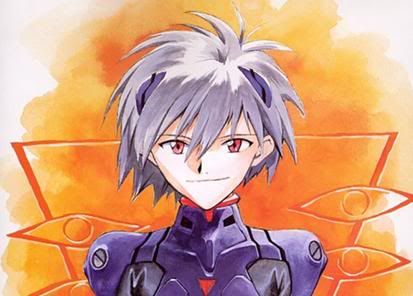
Who is Kaworu Nagisa?


I decided to rewatch Neon Genesis Evangelion for the first time in two years. I enjoyed it as much as I ever did, and it gives me an excuse to talk about something important to my experience with the series: the reason I don't ship Kaworu x Shinji.

It might be a tough thing to justify, when it seems like everything should be in place for me to ship it. I like both characters, find their rapport convincing, and I'm not homophobic (though this might make me look like I am). But I believe Kaworu plays a symbolic, ironic role that makes shipping him with Shinji a contradiction of what the series is trying to convey. That, and I don't ship anyone in Evangelion because all relationships in the series are dysfunctional, so I don't see the appeal of exploring the couples.

Anyway, Kaworu is a character that "needs" to die because he represents an unreal idealism that contradicts the rest of the series and the lessons Shinji must learn. Shinji must reject Kaworu in order to accept the real world in all its flaws, rather than retreat into the company of an idealized companion. It parallels Shinji's ultimate fate in both the television series' final episodes, and the film End of Evangelion.

In both versions of the ending, which may or may not be concurrent, Shinji Ikari rejects the comfort of a closed-in world for the experience of real humanity, however the narrative defines it. In the TV version he is moving from a closed-in world that is part of his wishes, to...something. Perhaps it is acceptance of the world of Instrumentality, the merging of all souls into one being, perhaps not.

In End of Evangelion, it is slightly more clear-cut. The remnants of Rei Ayanami give Shinji Ikari the ability to determine the direction of Instrumentality. At first he wishes that everyone would simply die, because the hates the world after what's happened to him. In response to his wish, the fused Rei/Kaworu/Lilith/Adam being initiates Instrumentality.

Even though Instrumentality is designed to eliminate the fundamental loneliness of humanity, and Shinji might've been happy inside it, he eventually overcomes his hatred of humanity to declare that he wants to be in the real world, even though it can be painful to exist there. Thus, he breaks Instrumentality, the fused being falls apart, and he returns to earth, with everyone having the potential to also return.

Even though Shinji isn't conventionally rewarded for his conviction, ending up currently alone on a strange, red Earth and strangling the first person to appear beside him, the choice he made is still meant to be the moral one, since it was exactly what the story was building up towards. Choosing Kaworu would be the opposite of what the story was building towards.

Just like Instrumentality could represent a cocoon preferable to real existence, Kaworu also represents a love preferable to the real existence, both potentially free of fear and uncertainty. Asking if Shinji and/or Kaworu are "gay" isn't the important question. The relationship between Kaworu and Shinji is deliberately unnatural in its speed and depth, so it can't be considered part of the characters' "ordinary" sexuality.

Instead, the relationship is beyond ordinary, beyond the "norm" of Shinji's existence. And Shinji does not fall in love with Kaworu as a person, but as an ideal. Shinji is not capable of a healthy, ordinary relationship, accepting another being with all their faults and flaws. Instead, he is unsure of what he wants, but so trapped in his own mind that he can't open up to a real person. It is a prefect situation for an unreal person to appear, and make the outcome more effective.

When Kaworu appears, Shinji has lost everything, or it has been corrupted. His overtures to his father were crushed with Toji's entry plug. His school friends all have to go because his city has been destroyed, including the injured Toji. Asuka, whom he masochistically looked up to, has had a complete breakdown, no longer being the "hero" he thought she was. Rei and Misato are both distant, Rei being a new clone has lost the tentative bond between them. And both of them now represent a disturbing mix of maternity and sexuality, Rei because she is his mother's clone, Misato because she was Shinji's mother figure, but reached for him on that bed.

Under these conditions, Kaworu appears even more like a dream than he otherwise would. He asks for nothing and gives everything, compliments Shinji in ways that would seem absurd to all the jaded folks watching ("I think I may have been born to meet you, Shinji Ikari"), and is immediately interested in Shinji as a person, and always maintains a calm, stable air, asking for nothing. His gender might also serve to further distance Shinji from his real world of corrupted potential love interests.

To further emphasize that Kaworu is not meant to be taken at face value, he makes cryptic pronouncements about the nature of man, and Misato and Hyuga race to figure out just what Kaworu is. The audience knows something is up, as they are being primed to accept this swift attachment between the two characters as building to something greater and darker than just Shinji getting his wish.

The bonding between Kaworu and Shinji is, in short, aware of its unreality and works with it. Kaworu is not realistic. Kaworu is not human. He doesn't fit with the world of Evangelion, and not just because he is an Angel. In this series, a perfect companion, who asks nothing but your happiness, will not simply appear and solve everyone's problems.  He does not fit with what we know of humanity, both the real version and all the flawed example seen in Evangelion. And, so he must be killed. It's not about Kaworu being "too good" for that world, in the sense that we are all supposed to mourn for the death of an "angelic" innocent, but that he just doesn't fit in.

Kaworu's abrupt entrance and exit further underlie the way he cannot "exist" according to the rules of the story. If Kaworu were around for longer, perhaps the narrative would need to define him as an individual character, fleshing him out beyond his symbolic role. But as he exists in episode 24, Kaworu's small existence lets him be just a symbol, and it fits him because of the role he plays.

Kaworu's betrayal also doesn't mean he is not an idealized character. Even though Shinji is angry with him, the scene ends with Kaworu still being a kindly figure. He tells Shinji that he is the one who deserves to live, and sacrifices himself to save Shinji and, by implication, humanity. Shinji is in turn destroyed emotionally by having to kill Kaworu, proving that the bond between himself and Kaworu did not disappear. He still views Kaworu as an idealized figure, and one worthy of existence.

The moment of betrayal, however, raises a question: was Kaworu lying all along, and does it affect the interpretation of Kaworu as a symbol? SEELE apparently sent Kaworu to NERV to initiate Third Impact in the guise of a replacement EVA pilot. Some fans have inferred that Kaworu's overtures to Shinji were part of the infiltration. 

Yet since Kaworu can just use his powers to manipulate EVA-02 and open Terminal Dogma, a close relationship with Shinji is not required for infiltration.  And if Kaworu were lying, he would not have left his mission incomplete and declared he was giving his life up for Shinji. It's still possible for Kaworu to be a liar if one assumes Kaworu was part of a design to break Shinji's mind, but as with much of Evangelion, the exact details are open to interpretation.

In End of Evangelion, SEELE wishes to break Shinji's mind as part of the process of Instrumentality, but it is not clear if Kaworu's appearance and death was designed to further that breakage. It might be possible.

However, the interplay between Kaworu and Shinji, while not destroyed if Kaworu had ulterior motives, is the most effective if a viewer assumes Kaworu was being earnest. The reason why he would bother with Shinji would remain unexplained, but they aren't that important. What is important is what Kaworu represents, as outlined above.

There are other versions of Kaworu, namely the ones in Yoshiyuki Sadamoto's manga adaptation, and in the Rebuild movies. Rebuild Kaworu hasn't done much yet, and it is possible he may play a completely different role. He has once said he would like to make Shinji happy, but if that will lead to something similar to his television role is unknown.

Characters aren't obligated to be the same throughout each iteration, but no other version of Kaworu has been as effective and affecting, and it's no surprise the original Kaworu would be hard to follow up on. Personally, I'd like to see if a work could alter Kaworu's television role without removing what made it interesting, perhaps giving him more depth of character but still managing to be inhumanly idealized. But that, however, is coming from a viewpoint of someone who already considered TV Kaworu to be the ideal.

Sadamoto's version of Kaworu has been nicknamed "Evil Manga Kaworu" because he once snapped a stray kitten's neck out of ruthless pragmatism. But when he becomes part of the main cast, this time earlier than before, he's more obnoxious than sinister. He lacks a sense of appropriate social boundaries and is questioning of human emotions, but in a way that makes him seem like a run-of-the-mill creep or a sullen brat rather than a thoughtful "alien". Shinji is also actively hostile towards him, and a kissing scene is played for his disgust rather than confused titillation.

I can imagine someone cheering Sadamoto for removing the taint of romanticism and idealism and a "shallow" character from the storyline. However, like I said, the original Kaworu was not meant to be taken completely at face value; his alien nature and brief betrayal show that Evangelion did not suddenly lose its teeth when Kaworu appeared. We all know Gainax wouldn't be above creating a character to draw in fangirls/yaoi fangirls, and it'd be unsurprising if that was another purpose beyond Kaworu, but that doesn't make him this ill-fitting example of sugary romanticism, especially in light of the relentless marketing of the female cast. Kaworu was never a misstep into fantasy land, but a justifiable part of the series narrative.

Therefore, to be annoyed with "Evil Manga Kaworu" is not about pearl-clutching that such a "sweet" character became so nasty, but being annoyed at the simple act of change, and that what in its place is just plain boring.

Going back to the original Kaworu, he's a good example of a character that doesn't seem to fit with his environs, before you realize how well he actually does. Some of what Kaworu ended up representing could be accidental, but it's effective nonetheless. It questions the notion of the idealized companion without beating viewers over the head with it, and manages to justify a character that could be perceived as shallow. In the process, though, it also enforces the strict pragmatism at the end of Evangelion, and ensures that the idea of a romantic relationship between Kaworu and Shinji would be greatly missing the point. Sometimes "the point" isn't what shipping is really about, but it still makes me want to avoid supporting the pairing.

Saturday, August 18, 2012

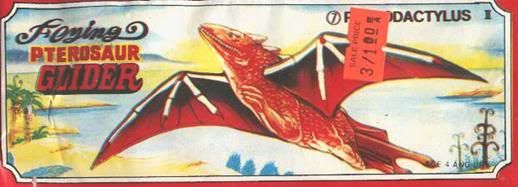
What is a Pterobat?

What is a Pterobat?


So, my blog name. It's the result of trying to change my Internet Name after over a decade of using it. It finally occurred to me that "Incisivis" wasn't the easiest thing to spell, pronounce, or remember, just as it eventually occurred to me that "Dragonclaw", my previous one, was uncreative and probably made me sound like a dopey furry. Being that way, I eventually settled on "Pterobat".

"Pterobat" is obviously a combination of the words "pterosaur" and "bat", two of my favourite things, and it has a certain ring to it. I started using it to refer to a certain style of wing found on the characters of Disney's Gargoyles series: characters who had tiny hands on their wings and a single supporting rib, but with the wing's edge being notched to suggest there was further, "invisible" ribbing. I never used it this very much this way, and so repurposing it was easy.

Today, I think of "pterobat" as referring to that certain kind of biologically inaccurate pterosaur which has batlike wings (hands included or not), usually also mixing features from different species. I also kept thinking of alien animals from the Transformers cartoon that might be called pterobat-like.  Shrikebats, first mentioned in the movie, and depicted in the episode "Chaos" of the original TV series, and a similar, smaller creature called Groyle is also seen in the episode "Madmans Paradise".

Picking the name rises from my pterosaur obsession, which I've had since childhood. I collect pterosaur junk and know a few things about things, and also wait for the day when a pterosaur-based fictional character doesn't suck. I don't know why I like pterosaurs like I do, but I don't mind pterobats at all.

The current blog header is derived from a piece of art by Edward Newman, and it actually is an early attempt at depicting a pterosaur. According to his Wikipedia entry (*sigh*) this was Newman interpreting a pterosaur as a mammalian creature, a "marsupial bat", and he published this in an 1843 edition of The Zoologist. Interesting if true, since it makes my header selection pretty on-the-nose, when I didn't know the origin of the art at first.

Thursday, July 5, 2012

Diagnosing Loki Fangirls

Well, I've been away from blogging for a while, and there's no excuse but that I somehow lost the mojo, which is easy to do since this is a hobby and not the job I intend to have. It's why I can be so lazy to begin with. So, let's get to it.

I saw Thor a while ago, and it was a fun movie--to me, it read like a better version of The Lion King, with a more compelling arc for the lead, a consistently threatening villain, and a more palatable take on all that fantasy racism. I also saw The Avengers before that, feeling I knew enough of the continuity to get by, and I was right. Both films have the kind of spirit I hope my work to have someday: ultimately gimmicky fun, yet also capable of some heartfelt emotion and never losing a sense of humour.

Something I want to talk about, though, is how many fangirls Loki has, and the fan boy "theorizing" as to why it happened.

I want, and try, to make room in my worldview for multiple interpretations of fictional characters, but at a certain point the notion that a character who commits evil deeds isn't a villain becomes something I can't get on board with. Regardless of the reasons these characters have for turning to evil, no amount of sympathetic backstory or understandable motivation can wipe their records clean. Writers should still try to give their villains these two things in order to create a richer world, but usually the roles of hero and villain are usually still clear enough.

The weird thing is not that female viewers have a crush on Loki, but that some of them insist he's not a villain. All of this has been attributed to some kind of hardwired female masochism. Women are inclined to throw themselves at dangerous guys in reality or fiction, trying to change them, trying to interpret them as Not Such a Bad Guy. This is the nasty gender stereotype explanation most often floated for villain fangirls, and it's not supposed to end with fiction.

It suggests women suffer from a fundamental lack of perception as to what a character is "really" like, i.e. a bad person, and that they always desire to "change" a man, an enterprise that would be useless and ultimately hurtful were the character real, but dammit, those silly little women would just keep trying. It's all implied to mirror a drama carried out in real life, a dramatic role that has nothing to do with societal expectations of women, but just the way women are. Women like to hurt themselves by being attached to assholes, whether in reality and fiction.

It's pretty disgusting to see over and over again, and because of this it's tempting to view the stereotypical "villain fangirl" as a straw(wo)man, designed to prop up these myths of female masochism. Yet evidence for this type of nerd exists all around us, so to a point it's real, but the explanations may not be.

Tuesday, May 8, 2012

The Last Robotech Novel [That I Read Out of Order]


I have an ambivalent relationship with the series of Robotech novels, based on the 1980s anime mash-up. On one hand, some of the novels introduced concepts that helped to soothe the various issues I had with the way other continuities handled my favourite characters and things, and also provided me with fanfic fodder. On the other, the novels are generally poorly-written, and also do horrible things with my own favourite concepts. It's a conundrum.

Because of this, I dragged my feet on finding the last two "Lost Generation" Robotech novels, the trio of "midquels" written when James Luceno was the only living half of the "Jack McKinney" duo. The other "Lost Generation" novel, The Zentraedi Rebellion, is, as I've said before, one with which I've made lemons out of lemonade, and which was founded on a solid concept.

However, The Zentradi Rebellion suffered from the same basic problems as the other two novels, which are excessive "grittiness", and redundancy. I'm sure they also mess with continuity, too, but I'm not so invested that I would spend time figuring out how exactly they do.

Recently, I managed to find the last of the "Lost Generation" novels, The Master's Gambit, in a used bookstore. It actually precedes Before the Invid Storm, which I read beforehand, but my apathy should be a clue as to why that doesn't matter too much. I read The Master's Gambit in three days, feeling the urge to wash my hands of it but unable to stop reading. It's one of the few times I've succumbed to that nerd disease known as completism.

The three novels roughly correspond with each "generation" of Robotech, and this one is parallel to the middle-segment Robotech Masters series. A lot of its content is supposedly based on Robotech: the Untold Story, a movie combining the anime film Megazone 23 and other footage to create a Robotech movie that never saw a wide release. I cop to not seeing either Megazone 23 or Robotech: the Untold Story, and look at this novel in terms of how it fits into the overall scheme of what I do know.

While others may not accept the spot-welding of three unrelated anime series, the world portrayed in The Master's Gambit seems even farther afield from the common ground the original series supposedly had. The more familiar world of military politics and impending alien arrival, is combined with a story about hackers, information trading, and neo-yakuza in future Tokyo, sending readers off-balance.

What The Master's Gambit does add to the plot and characters is almost universally, unrelentingly, bleak. This is a problem of all three "Lost Generation" novels, and I might as well re-articulate it here. The mainline novels already tried to up the sexual and violence quotient from the edited anime, but the Lost Gen novels go up higher, and add so much cynicism to them.

For example, there is the portrayal of Dana Sterling as a "wild child" which includes "seducing" the older Terry Weston, which is pretty wrong and horrible. An older man doesn't get "seduced" by a teen, okay? I don't care what erotic fanfic you like to write. Terry Weston was the protagonist of a minor Robotech comic series, so I'm not caring about the stain on his reputation, but it all sounds like something added to make the novel "edgy" without larger consideration. It simply doesn't compute with the world of Robotech to have this type of storyline, nor does it match with the cheery, peppy Dana Sterling of the animated series. Pair this with the very broken understanding of statutory rape, and we have a barrel of fun here.

(Another odd thing about the novel is that Luceno likes to pepper the Japan sequences with Japanese terms and phrases, most of which are translated, but it still reads like a bad anime fanfic. There is also a character named "Misa", which might be a reference to the original Macross.)

This is totally unsurprising given my Zentradi obsession, but the extremely dour perception of what would happen to the Zentradi stood out the most to me. However, even if you don't have any particular sentimental attachment to the Zentradi as a concept or as characters, their fate nicely shows the underlying problems of the "Lost Generation" novels, and is the example of lazy writing.

Yeah, the main series of novels did stupid things with the Zentradi, too, but the last two "Lost Generation" novels really do exceed them. They portray a world in which the humanity and human contact that the allied Zentradi wanted, everything they defected for, has completely gone to shit, due to a combination of xenophobic government policy, and the Zentradi's own inability to escape an ennui that comes with no longer being warriors. To that end, they have all self-exiled themselves to the non-functional Factory Satellite, where they basically sit around and wait to die, their only action taken being to become a sacrifice to protect the Earth.

Now, plenty of stories have been written to end in absolute failure, usually to make a larger philosophical statement. And I can see where Luceno might have gotten some of his ideas from: the later episodes of the TV series do show Zentradi having problems adjusting to human life, including turning on their allies and being unable to know what to do with their lives. However, there are still the questions of tone and quality to consider.

Macross is, even in the Robotech-dubbed form, a series about hope and sweetness and taking silly things seriously. It doesn't shy away from displaying the darker aspects to life, but that is only to bring its idealistic nature somewhat back down to earth. A grim tale of failure doesn't organically follow from a series about love triangles and giant alien fanboys. Problems with the Zentradi come off as bumps in the road, nothing to define the entire allied race or their future.

Furthermore, if a bleak ending is not justified by anything deeper than "Life's a bitch and then you die", it just seems like the author ran out of things to actually do with the characters or ways to build up their world/plot, and decided to just be lazy instead.

Conveniently, the only Zentraedi who could give lie to this perception of their race's future are either gone or dead. I'm still sore about Rico, Bron, and Konda being killed off due to an unexplained illness, but at least they were treated with some level of sentimentality and respect. The last two Lost Generation novels name-drop these characters but without any of that sentimentality, or dwelling on how their actions (spearheading a rebellion against their oppressive military structure and never being a danger to humanity) might contradict the views seen in these novels.

The basic idea is instead that even if the Zentradi thought they wanted freedom from the military lifestyle, their own instincts betrayed them even more than humanity's political backlash did. There is even a scene where Rolf Emerson, Dana's surrogate father and caretaker, actually pauses to wonder if Dana's temperamental behaviour is the result of her Zentradi genes, and the "gentle" genes from her human father helped to temper them. And this is supposed to be a heroic character? It doesn't manifest in his treatment of Dana at all, but it's still jarring.

It is particularly shocking because the Sentinels novels, which run parallel to these books, but were written before, have a much more sentimental treatment of the canonical Zentradi characters. There are several wrong-headed moves made, such as Breetai sacrificing himself to end a karmic cycle of violence, and Miriya quitting the military, but a reader gets the impression we're meant to care about these characters, and they're meant to be happy/doing the right thing. I wonder if these ideas were the product of Brian Daley, and Luceno had the darker vision of the Zentradi?

Another place where this is evident is in the portrayal of Exedore, my favourite character in the whole thing. In the Sentinels novels, he is presented as a benign figure, participating happily in scientific and social endeavours and having an amicable nature. In The Zentradi Rebellion, he is cynical and harsh instead. Now, I decided to interpret this as his jackassery being intentional, but a result of stress and an over-applied pragmatism, plus the mean streak that he already displayed in "Blitzkrieg", all that he eventually learned better from to become the nicer Sentinels Exedore. However, now I can easily see that these are simply two different views of the same character, without any intention of progression.

I might be generous and say that as far back as Carl Macek's original plans for a Robotech sequel, which these novels are based on, he wanted to suggest the Zentradi were very low in number, and that, due to the speed of novel production, Luceno just came up with something on the fly, without considering the larger implications involved. Even so, the results as well as the circumstances should be looked at critically.

And anyway, if the line is that Robotech is all one series, why try to get rid of elements from the first "season" when these elements could be integrated into the whole with a novel version, enhancing that perceived unity? It doesn't make sense. (An alternative explanation is simply that Macek was considering the total proportion of Zentradi, allied and not, who died, which in this case, the remaining defectors would be smaller in number, in comparison to the original intact, living army).

Are there any good things in this novel? Actually, I thought that Luceno's world-building, his little allusions into how societies and social hierarchies have changed after the near-apocalypse were interesting, actually feeling as though they were part of a developed setting that offered enough glimpses to make a reader feel satisfied without overwhelming them with exposition. The military and political manoeuvring would have been fascinating to read about if it did not enhance the character relationships in the TV series, and really didn't have that large an impact on the overall narrative. Nor does the part of the story with the Robotech Masters offer anything more about the race's vaguely-explained backstory. If the narrative had gone more places with these things, it would have been more fulfilling.

I would like to think that even if I had read these two novels while working through the strongest stages of my Robotech obsession, I would still be able to use the good things the other novels provided for me with a clear "conscience". However, I wouldn't like to try out that hypothesis, and am glad they were both encountered later, because god only knows the vast quantities of nerdrage they would have inspired when my interest was at its peak.

Saturday, March 10, 2012

Strong Female Characters

‘Tough, Cold, Terse, Taciturn and Prone to Not Saying Goodbye When They Hang Up the Phone': Carina Chocano on "Strong Female Characters" [Google the title if the link doesn't work]

The Comments on Io9

This article will be more a response to io9's comments on the article rather than the article itself. Chocano's article had pretty much nothing to do with genre fiction at all, while the io9 comments make it all about whether Buffy, Scully, Starbuck, etc. are "men with breasts".

I agree a bit more with Chocano, who seems to be as much against female characters being flawless, as their not being "womanly" enough, though her article still represents the latter. One of the forgotten aspects of progressiveness, likely because it's not all that romantic (in the classical sense of the term), is to show that the minority or persecuted group is just as flawed and can be just as awful as the dominant group.

However, the io9 comments are filled with people who apparently believe the problem with sexism is that the innate traits of women are given less value than the innate traits of men, who desire to re-establish a hierarchy rather than demand greater depth from fiction in total. You're almost waiting for someone to use the term "mannish".

When really, it's a problem all around when heroes are impervious and devoid of flaw or worry. It's a problem if there is only "one kind of strength", but not because it's men's strength being painfully grafted onto women instead of utilizing women's "unique" strengths, but because it is less limiting to define strength based on a small number of factors, whether for female or male characters.

Also, the phrase "men with breasts" might get the point across to the choir, but for many, it's just bewildering. No one can call a female character "a man with breasts", because no one has produced such a timeless, clear, universal understanding of gender differences that we can say for certain a female character with X ratio of masculine traits is so completely impossible for her gender that she is "really" a male character. "Man with breasts" just seems to be another way to state that a character doesn't conform to a critic's personal definition of womanhood and is therefore some kind of freakish fantasy, while the rest of the world may not actually agree.

Take the female Starbuck from nu-BSG. To some, she's a "man with breasts" (and not only because her character was originally male), while others are relieved that she retains "some femininity". If the alleged modern archetype for "man with breasts" can't be agreed upon as insufficiently feminine enough, then the issue is more complex than it appears.

I've often asked myself why it was so important that Starbuck retain "some femininity". Based on this article, I would hope it to be a badly-phrased relief that she is an imperfect character. But the problem is the bad phrasing. They are trying to prove that Starbuck "really is a woman", because a false dichotomy has been created: that if a character is stoic and violent, they are "a man", and if they are emotional and vulnerable, they are "a woman". There is an X level of "masculine" traits a female character must have to become a "man with breasts", which is an awful thing, so Starbuck must be proven not to have reached level X. It's gender policing: albeit for a fictional character, but it still exposes some very ugly attitudes in the real world: despite gender differences supposedly being "natural" and "innate", one can still be policed for not expressing their gender in an approved way.

I would put the issue in different terms. Starbuck being imperfect does not prove that she "reall is a woman", but that perfect characters are boring and so, male or female, they must have some nicks in their armour. Starbuck is particularly good because she does have that, and when her issues are showcased, they do not seem to be a commentary on the fact that she acts rough because of her issues, and if they were not there, she would be a "normal" woman. Instead, she is simply a twisted character, but one for whom it is no special tragedy that she is a female fighter.

The reason this debate exists, of course, is the feeling that society values "male" traits rather than "female" traits, and that women can gain approval by adopting these "male" traits, but the attitude towards "female" traits remains disdainful. By creating more vulnerable and "feminine" action heroines who are still triumphant over evil, the hope is that "female" traits will become more valued.

A noble goal, but that still doesn't explain why love, nurturing, emotional expression, and whatever else is deemed "feminine" is a desirable trait in only female characters, rather than an opportunity to make all characters multi-faceted. True, these traits are traditionally associated with women, but they can't be distanced from society and culture enough to label them as universally female traits and no reason to consider these traits only valuable for female characters to have. If one truly wants to create a peaceful, equitable world through popular culture, it would be to have all traits open to all characters of all genders, rather than establish testing to ensure female characters are sufficiently feminine enough.

That being said, I really can't recall any female characters of any medium or genre who truly lack in any form of vulnerability or in expressions of "female" emotions. All of these staples of nineties genre TV that are under discussion never met that criteria for me. As for the issue of female characters shunning "girly" tasks/hobbies, that's wrapped up in a whole mess, namely that these girly tasks/hobbies are still part of what's considered obligatory for women, instead of becoming personalized interests or something to build a career from.

So it doesn't surprise me that shunning "doing girly things" is used as a quick symbol for independence in younger female characters, being that such girly things are part of the huge package of expectations placed on women, and not presented as a voluntary choice (this is also why Rebellious Princesses still tend to be popular, despite the backlash). That doesn't justify this trope, but I find it hard to get upset about it. Personally, I'd rather have such characters simply lack those interests, without active defiance coming up unless it was a major plot point.

[As an aside, being critical of female characters "falling in love" isn't, to me, part of the hatred of femininity, because it's not about the process itself, but that because female characters are subsequently in danger of, at the hands of bad writers, becoming just "the love interest". That is why fans are wary, not because falling in love makes female characters "weak".]

What I will say is that media does suffer from a very widespread problem with female characters, but it's not that they're too "masculine". Rather, it's that female characters are too "perfect".  They are the hyper-competent moral centres in all genres, rather than being exposed to the same flaws and range of traits as male characters. Being "removed" from feminine emotions could be considered part of this, but again I don't see female characters who are actually distant from their emotions. I'm thinking more about female characters who can be selfish, neurotic, abrasive, weird, without it being characterized as "cute" or with an air of moral condemnation. This is largely the fault of anti-feminism, of putting women on pedestals as a form of "benign" sexism.

[By the way, I don't think Kate Beaton's, Meredith Gran's, and Carly Monardo's strips about a similar subject were really mocking the "men with breasts" characterization so much as the fact that fightin' female characters are often shown to be "secretly" vulnerable at opportune moments, which is a Real Thing that I've seen far more often that the "impervious" female character. The strip where she throws the guy out the window is the only one that it feels like the "female warriors are not allowed to show human emotions" trope is being mocked. And the one with the character eating cookies isn't mocking the fact that girliness is disdained in female heroes, but that most female heroes end up being "secretly" girly, which is why she eats those damn cookies.]

In short, I see some of the issues brought up here, but anyone who uses the term "man with breasts" becomes impossible to take seriously. The issues have not been reversed, and I can't remember a female character who actually is as invulnerable as these people say. Multi-faceted characters are good for any gender, and beneficial human traits don't only belong to one sex.

Tuesday, February 21, 2012

Sauce for the Goose

The Nostalgia Chick: Top Ten "Hottest" Animated Guys

I can't really tell how much of the analysis done in this video is Lindsay playing a character, and how much is what she actually believes. But either way, she brings up points in this video, and I'm going to address them.

It's a little disappointing not to see a female equivalent to the male polymorphous perversity. Guy nerds are definitely more open about their attraction to fictional characters, especially 2D ones, but I don't think this is an inherent gender difference either. I think it springs from encouraging women to be more "enlightened", to not be so crass or so bizarre as to be attracted to something that doesn't exist. But if it's creepy for one gender, it's creepy for the others.

As to the apparent greater diversity that female fans have when it comes to cartoon crushes, I don't think it represents something fundamental, either. I think men and women are equally shallow about looks, it's just that being good-looking, while partly down to genes, is also hard work. Therefore, it's no surprise that men, being in power, subconsciously and gradually created a system with the illusion that women don't care how men look, in order to ease that burden on themselves.

A weird offshoot of this is the notion that women have a wider variety of physical "types" to be attracted to, and in terms of this, it translates into female fans getting crushes on old guys, nonhuman beings, and the Peter Griffins of the world. If all things were equal, we'd either see a dissolution of the idea that women care less about looks, or men would have to admit they can have weird tastes, too.

Granted, it's hard to put this to the test when there are very few elderly women or grotesque female beings as lead characters for guys to go after. Or whether they would want a sugar mommy the way that the Beast can be read as Belle's sugar daddy. I have also seen that male and female viewers tend to "do" fandom differently, but I don't agree that it manifests in female viewers being more interested in character and male viewers in "OMG TITS" when it comes to cartoon crushes.

Have you ever seen a sexpot character without a sultry personality to go with it? Or the personality of an ingénue, or an Amazon, or what-have-you? Most of male fan's female lust objects do have a character. In addition, MOST of the characters listed in the video are young, fit, and close enough to humanoid to be the equivalent to whatever animated girl the guys are into. Frollo and the Beast (as a Beast) are the only real deviations, since Goliath is no different than nerdy guys being attracted to an elf or a demon: a shape that's basically human but with some funny bits glued on.

…Probably because I don't buy into these theories, I'm still gobsmacked by Frollo scoring a spot.

For another observation, It's too bad Tuxedo Mask was the only anime character on the list. One of the few things I still think anime has over American cartoons is that they design some male characters for attractiveness to female viewers, while American cartoons are more likely to design male characters that men would like to be. Sure, female viewers do in quantities like the big-chinned, beefy look, but you can bet this happens by accident.

There are exceptions, of course, and it's no surprise Aladdin made the top, since he's one of those characters designed for the interest of female viewers. Prince Naveen is another one, and he's pretty different from someone like, say, Gaston, isn't he? I think there's a spectrum: some fans find lighter, softer characters more sexy, some find the harder warrior-type more sexy, and this isn't much to do with the gender of either side.

To finish, I don't believe women like "projects" or "bad boys", or if they do, it's a kind of cultural illness and not a fundamental part of the female psyche. And, well, I don't like the tendency to assume that female fans like characters because they want to "fix" them, in the case of villains, or "unbutton" them (literally or figuratively) in the case of stoic characters. Why can't we assume female fans are drawn to the characters as they are? Sounds suspiciously like the idea that women don't know their own minds.

I also don't find what about a tortured past makes a character attractive. It certainly makes them interesting from a storytelling point of view, and it might lead to personality traits that are attractive to some, but the notion that a tragic past is inherently, universally sexy to female viewers is baffling. The assumption probably is that female fans want to nurse or nurture the tortured characters, but that still is assuming female fans want to "transform" the character into their own image, rather than accepting the character as they are.

Basically, I don't think female fans are, by and large, too enlightened for cartoon crushes, or more enlightened than guys are, nor are they more interested in moulding the characters to their image--at least, any more than guy fans would be.