Showing posts with label monster high. Show all posts

Wednesday, November 7, 2012

On the Purported Emasculation of Stock Movie Monsters


You've heard it: these days, werewolves and vampires are too wimpy. They've been turned into love objects for teenage girls, made friendly to young children, have been figuratively and even literally defanged.

My gut reaction is to prefer monstrosity in my stock monsters, to prize those examples that are violent, bloody and accursed. Until recently, I've never tried to understand why I do this, but now I think I understand: it's because these types of vampires and werewolves are generally better for telling intense, conflicted stories.

I'm still not interested in pushing my preferences on the media culture at large, in pretending to dictate what monsters should be. If we're going to keep using the same monsters over again, we had better keep them open to all possibilities, to reduce the repetitiveness.

The problem is not that monsters have become lovers. I hate Twilight as much as the next nerd, and I don't like the idea of vampires and werewolves as something to fall in love with rather than maul you. But this phenomenon is just one part of the larger thing, the real reason I'm uncomfortable with the "modern" portrayals of vampires and werewolves: that authors transform being a monster into being a gift rather than a curse, and in the process, remove a source of conflict. Being a "monster" now becomes wish fulfillment, and leaves writers scrambling to come up with new sources of conflict.

New writers are often told that the goal of a popular fiction story is to "hurt the hero". It means that you must put the protagonist under fire because how they respond will show who they really are, and it will drive the story. If there is no conflict, there is no plot, and we never get to see what the hero is made of (even if it turns out to be mush).

This is reflected in the many stories that have wishes and dreams that never turn out to be what they appear to be. There are caveats, deception, and eventually the hero will be forced to sink or swim. If a character gets everything they want right away, then there is no plot.

In the standard formula, the vampire or the werewolf is the source of the conflict. They are the obstacle for the heroes to defeat, or the curse that affects the protagonist. In this, it is made clear that being a vampire or a werewolf is not desirable.

Writers obviously have found new sources of conflict to drive stories where being a vampire or a werewolf isn't destructive, but there's still that bedrock need to have werewolves and vampires who are frightening. The desire for conflict isn't the only reason for this, but it's the most relevant. That's why I don't like it when the vampire is no longer a monster to be defeated, and the werewolf is no longer a ticking time bomb. There's no longer any tension, anything to draw an audience in.

Vampires and werewolves becoming lovers is only the offshoot of this. Once you have it so that vampires and werewolves are more like superheroes, or they are just "good people", you have the potential to make them into unalloyed love-objects.

 If you are going to have a vampire or werewolf love interest, that means dialing back the cursed aspects at least a little (how much varies widely), and that would involve taking them in a direction that was more to do with superpowers. It's not that far from Selene to Edward, really.

This is especially true of vampires. You can argue the tradition goes back to Dracula and so is beyond reproach, but even so, the idea that being a vampire means you get to be beautiful, aristocratic, and immortal, with tiny, pretty fangs seems much more like wish fulfillment than even the most easiest and voluntary of werewolf transformations. You can try to layer angst on top of the facts, but even so, it sounds hollow because of the opulence involved.

Yes, it's true that everybody seems to have a much smaller problem with superhero werewolves and vampires than they do with "romanticized" ones, but I think they're two closely related things.

I doubt everybody is thinking the issue through to this degree, both on the side of fans or creators. Some are simply acting out of a conservative instinct: if monsters have always been this way, then there is no reason to change them, no matter what the quality of the results.  That might also be true for me, too, a little.

Many blame women for this phenomenon, considering it the result of girl cooties getting into the horror genre, whether it's Anne Rice or Stephanie Meyer. Usually this is an unspoken accusation, but sometimes it's out there in the open, such as an article about an upcoming TV series based on Guillermo del Toro's The Strain. It characterizes its horrific, parasitic vampires this way: "Fittingly for male-driven FX, unlike the traditional, romanticized portrayals of vampires as tuxedo-clad studs, The Strain‘s bloodsuckers have no seductive powers […]" The implication is that women don't know what "real" monsters are, and have polluted the genre with their idealized blood-sippers.

That's wilful ignorance at its finest, what with sexualized female vampires being so popular. This is a direct example of the sexism brewing whenever  nerds complain about monsters "no longer being scary", but it's not the only time these sentiments are obvious.

I refer to "emasculation" intentionally, because even if they don't blame women for it, the nerd rage is directed almost entirely at male monsters, often calling them "pussies" or "fags". They're no longer scary because they're like icky women, is the message. I haven't seen anyone complaining that modern female monsters aren't scary enough.

Twilight deserves all the garbage thrown at it, but to act like the worst examples of monster emasculation are the result of some female thing, of tainting monsters with femininity in one way or another, or that seductive female monsters are totally okay, just kills the argument that monsters are no longer scary. If  you blame women for it, you lose.

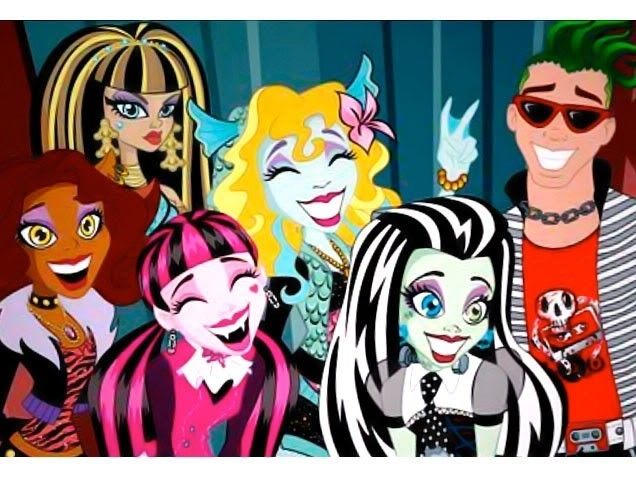
Besides becoming gifted beings and romantic objects, another way that monsters are supposedly emasculated by modern culture is to make them out-and-out good guys, or even persecuted by humans, the "real" villains. Children's cartoons like Hotel Transylvania or the Monster High franchise are the most recent examples, but of course there are many. Because this stuff is for kids, and far older than Twilight, it seems to have passed off the nerd radar, but I'd like to talk about it briefly.

This stuff bothers me is because it just flips the absolute morality around, so that we're still dealing with simple lines between good and evil, but then the writers can pretend they're being creative. Straight reversals can be effective, but a lot of the time it just leaves a story feeling cheap and simple. And that's a lot worse than monsters no longer being scary.

In short, while I do dislike the idea of vampires and werewolves not being obstacles or threats, it's a phenomenon that's larger than paranormal romance. It's about supernatural powers becoming superpowers, about wish fulfillment over conflicts. Not to say it can't be done well, but it can be hard to create new sources of conflict and rebuild a mythology. And whatever the results, just don't blame women for it.

Monday, September 12, 2011

Julia Phelps


I’ve bought more girls’ toys in the past couple of years since...ever, and that includes my actual childhood. The natural culprit is My Little Pony: Friendship is Magic, but just as that show began making waves outside the target little-girl demographic, Monster High was making something of the same headway. There’s been no explosion of guy nerds or notably visible fandom interest in Monster High, but there’s still the feeling that this is another little girls’ property that has made more nerd headway than I usually see.

My relationship with girls’ toys is complicated. I’ve come to realize that fandoms do exist in the same way for girls’ American cartoons as they do for boys’ ones, but I still find that things targeted towards boys have more appeal to me. Not necessarily in that they’re more “butch”, but they tend to have storylines with more conflict and more firmly rooted in fantasy and science fiction, all of which I prefer. Femininity needs to be respected, but it also needs to be said that storyline types shouldn’t be gendered, and that stories with conflict and non-saccharine fantasy aren’t necessarily masculine things. I still can’t shake the feeling that the parameters for female entertainment are actually narrower than those for male, and it’s not just a matter of what women like being automatically disrespected.

Anyway, I know that its high school setting dooms it to a more domestic conflict, but it still bothers me that Monster High’s adventures usually have little to do with the fact that the characters are monsters. I also still consider the positive qualities of Monster High to be overrated: it’s not that much more developed or daring than most other girls’ toylines, and to call it such depends on a far too pessimistic vision of what girls’ toys promote. Girl’s toys have always been about friendship and “being yourself”, and only try to promote a narrow female ideal through unspoken means.

Just as with FiM, my primary focus was on a nerdy female character. My favourite character in the toyline is undoubtedly zombie girl Ghoulia Yelps. I don’t like zombies as a monster genre: I just see them as dull and gross. However, Mattel keeps making me adore Ghoulia, who started out as the smartest kid in the cast and is now portrayed as a bona fide nerd.

I’m always drawn to the intellectual characters, and Ghoulia, being a zombie, can only speak in groans of various pitches. It’s an appealing and funny contrast between her intelligence and her physical mannerisms, as well as the expectations of zombie smarts. There’s a further joke about a zombie being “brainy”, which the doll manufacturers have been playing up by putting brain patterns onto her latest outfits.

Besides this small cleverness, Ghoulia is also the closest the cast has to an actual female grotesque. While Monster High bills itself as being about “freaky being cool”, naturally the characters are still designed to be mostly human and attractive, with small features like odd ears or skin tones, or tiny fangs--although to the series’ credit, it mostly goes for handsome male monsters, too (mostly). Ghoulia, however, has a twisted spine, shuffling legs and her mouth often hanging open, with the occasional thousand-yard stare or twisted smile; in one cartoon short, a fly comes from her mouth. Her toy likenesses eliminate these tells, and she isn’t really that “monstrous” at all (and as if to make up for it, her “boyfriend” character is probably the ugliest one), but I like to give some props to the fact.

In her own way Ghoulia still has a great character design, one of those whose colour and shape immediately strike the viewer as memorable, in ways they usually cannot define. I love most of Ghoulia’s outfits and the way her red and black and white clothing works with her blue colouring, even if her enormous platform heels still hurt to look at.

For the San Diego Comic Con, the Monster High exclusive toy was Ghoulia sporting some in-universe cosplay. She was dressed as the Flash-like Deadfast, a jokey play on zombie slowness. She had her own tiny fan-comic accessory and con badge, and it was enough to induce a sugar coma. Not enough to make me dig out my wallet to buy one, but thrilling enough that a girl’s toyline had considered such blatant displays of nerdery.

This continues outside of the SDCC exclusive, with the related web short “Daydream of the Dead”, in which the costumed Ghoulia imagines herself saving a rare comic at a convention. If Ghoulia were real and Deadfast fictional, we would all be crying “Mary ‘Sue!”, but because they’re both fictional, the story becomes cute instead.

Another toy release for Ghoulia was a set of extra clothes to dress one of her dolls in. Said set includes a tiny comic book, a Deadfast t-shirt, and a tiny action figure on a teensy blister card. It’s absolutely adorable, and is another purchase to add to my Monster High collection when it reaches Canada, even if I’ll have to rebuy a Ghoulia doll to dress her in it.

 In addition, there have been small hints throughout the franchise that horror nerds might be part of the process, in the form of little references and injokes. In Ghoulia’s case (the one I’ve paid the most attention to), her long hair and hairband may be reminiscent of Barbara from Night of the Living Dead, and her red and black outfit with musical decoration might be an oblique reference to “Thriller”. Her pose in the artwork for the “Dawn of the Dance” sub-line is also quite reminiscent of the Thriller Dance.

Kid’s toys don’t directly and malevolently slam intelligence, but girl’s toylines tend to push “normal” characters far harder, setting their premise in the real world and leaving them as ordinary humans. Who would have thought they would have gotten nerdiness so spot-on?

What is sadly not surprising, however, is that while Ghoulia is considered part of the main cast, “Daydream of the Dead” is the first time she has been the central character in a cartoon (“Cyrano de Ghoulia” doesn’t count, since the viewpoint characters actually were the rest of the cast who were helping her). It might just be because she can’t speak English and so would be harder to interpret without other characters to filter her words through, but it’s hard not to imagine that the world isn’t ready for a nerdy character as a lead, even if she is fashionably dressed and relatively conventionally beautiful. Thank goodness FiM had better luck with Twilight Sparkle.

I also like that she enjoys fast food and is best friends with Rich Bitch Cleo De Nile, and attracted to jock zombie Slow-Moe…it makes her a little bit different than other nerd characters, showing that Monster High isn’t quite so strongly bound to the weird American obsession with high school class divisions.

However, Ghoulia isn’t exactly a deep or resonating character; I’ve pretty much said all there is to know about her. There’s a lot of clever little jokes and a good character design, but that’s it. This ensures Ghoulia is confined strictly to the C-list. But it’s a good C.

Thursday, November 11, 2010

Passing Grade


Slowly, steadily, I am becoming comfortable with admitting that I do like the Monster High franchise--Mattel’s attempts to create a multimedia franchise about cute monster girls in high school, starting with the dolls but also including animated shorts and novels--a little bit. It started with seeing that other geek girls were getting into it, followed by trying to resist the temptation to buy a Clawdeen Wolf doll, then eventually giving in and admitting I really did want it, a werewolf that looks more like a beautiful girl with fangs and wolf ears, sporting platform shoes and a minidress.
 I’m still confused as to what Clawdeen is doing here in my apartment. Ever since I was a nerdling, I’ve held an undying grudge against the concept that every female monster must be pretty or a pretty version of a male monster. Furthermore, fashion and what’s called “beauty” these days just isn’t my thing.

Any larger-reaching complaints about either of these things are more about them being the only options available for girl’s toys or (almost for) female monsters, and not being intrinsically bad themselves. If this weren’t true, I’d have less of an issue with pretty-girl monsters or fashion-focused toylines when they did appear. I’m particularly irked by the suggestion that the werewolf girl must shave her entire body, ensuring she’s freaky, but not too freaky, y’know?

(This is not an issue of making monsters “wimpy”, either. It’s not really possible to “damage” the reputation of a fictional creature by providing softer depictions of it.)

Monster High does try for some equality with two monster boys that also look nearly human. It deserves points for this, and it’s probably more than a male-targeted toyline would do. However, all things are not equal, as the background of the animated shorts, you’ll find plenty of more conventional male monsters inhabiting the school, while all the female students still look pretty.

There’s also a bit of a “bad fanfic” vibe to the premise that someone not steeped in fandom would probably not recognize or react to: not only are the MH characters in (dramatic voice) HIGH SCHOOL, but they are meant to be the children of “legendary monsters,” in some cases naming their progenitors as the exact figures from movies and mythology. It’s so danged subcultural of me , but I can’t help my knee-jerk response to this, thinking ill thoughts about the many fictional characters have been transformed into high school students or saddled with bastard offspring.

And then there are the puns; oh my god the puns. Help!

Despite these criticisms, I decided to give the issue more consideration. Besides pretty-girl monsters, “Monsters in high school” has also been done a lot, including Gravedale High, which I grew up with, so what made it different? Well, Monster High isn’t exactly different, but I’ve observed a few things about it that are a cut above.

First of all, loathing of pretty-girl monsters aside, I like the art style of the packaging and the webtoons. I have this weird, moth-like attraction to bright, colourful objects, and on this it delivers. The colour schemes of the characters are striking, even if their shoes are painful. And sometimes, the cartoons do get a chuckle out of me.

Secondly, No matter how much I bemoan the lack of true female grotesques in popular culture, Monster High is still unlike most girls’ toys. I’ve always been disturbed by that most girls’ toylines deal with “normal” (if privileged) life instead of anything supernatural or fanciful, and those that do involve fantasy elements are relegated to an even younger set, as if being a girl leads to only thinking about what is possible in the real world.

Monster High is only just a little dissimilar to this, but I might have underestimated the power of geek girls and women seeing something “freakish” targeted explicitly towards them, rather than having to eternally piggyback off boys’ toylines if they want to deal with anything behind the glitzy mundane.

I also get the impression that many fans consider the storyline behind the dolls to be more considered and positive than the usual “shopping, flirting, fashion” mien of girls’ toys, but that doesn’t right true. Yes, Mattel did put some work into defining the characters’ profiles and personalities, but so do a lot of toys, and these are still “normal” high school girls organized into neat archetypes, despite their exteriors.

Overall, the reasons I have for being interested n Monster High are only small ones, stacked low against my difficulties with it. I don’t believe Monster High is really all that subversive, but at least it can be an entertaining diversion in small doses.